
Domestic Violence
Help for domestic and family violence
There are many types of domestic and family violence. It is violent, abusive or intimidating behaviour by a partner, carer or family member to control, dominate or cause fear. It doesn’t have to be physical abuse. It can be emotional, psychological, financial, sexual or other types of abuse.
Coercive Control is repeated patterns of physical or non-physical abuse used to hurt, scare, intimidate, threaten or control someone. From 1 July 2024 coercive control is a criminal offence in NSW.
Domestic and family violence can affect anyone in the community, regardless of gender, sexual identity, race, age, culture, ethnicity, religion, disability, economic status or location.
If you’re a victim of domestic and family violence, there is help available.
Protect yourself when using this website and stay safe online.
Anyone in immediate danger should call Triple Zero (000).
Domestic and family violence help lines:
- Domestic Violence Line (24 hours) - 1800 65 64 63 - Statewide (NSW) counselling and referrals for women experiencing domestic and family violence.
- 1800RESPECT (24 hours) - 1800 737 732 - National helpline for people experiencing sexual assault or domestic and family violence.
- Full Stop Australia (24 hours) - 1800 385 578 - Nationwide free counselling support.
- Rainbow Helpline (24 hours) - 1800 497 212 – Support for LGBTQ+ individuals or family members, friends and supporters who have experienced sexual, domestic or family violence.
- Ageing & Disability Abuse Helpline (Mon – Fri, 9am - 4pm) - 1800 628 221 – to report or to get information and support related to ageing and disability abuse.
- Men’s Referral Service (24 hours) - 1300 766 491 – National counselling and referral service for men who are concerned about their use of violence.
How can I help someone facing domestic and family violence?
Sexual assault
Sexual assault and abuse can have devastating impacts. Sexual assault is any unwanted sexual or sexualised act that causes the person to feel uncomfortable or scared.
Domestic and family violence can include sexual assault or abuse such as:
- any form of pressured or unwanted sex or sexual degradation by an intimate partner or ex-partner, such as sexual activity without consent
- causing pain during sex
- assaulting genitals
- coercive sex without protection against pregnancy or sexually transmitted disease
- making the victim perform sexual acts unwillingly (including taking or distributing explicit photos without their consent)
- criticising or using sexually degrading insults.
There are services out there that can help:
- Sydney Local Health District Sexual Assault Service (02) 9515 9040 After hours: (02) 9515 6111 Specialised counselling around domestic and family violence and help with case management needs.
- NSW Sexual Violence Helpline
1800 424 017
24-hour helpline for anyone in NSW impacted by sexual assault including friends, families and supporters. - Full Stop Australia
1800 385 578
24-hour trauma-informed telephone and online chat counselling. - Victims Services, NSW Department of Communities & Justice
1800 633 063
Victims Services helps victims of crime. It offers support services for victims of sexual assault, including counselling, victims' rights, and how to get support through the justice system.
How can I support someone who is experiencing family violence?
Finding out that someone you know is being hurt is always hard. Perhaps you want to help but don't know what to do. The good news is that there are simple things you can do that can make a big difference.
When someone you know is experiencing domestic or family violence, the way you talk and listen to them makes all the difference. You may be worried about doing the wrong thing, but it is important to know that it is OK to say something. Many people are glad to have the chance to talk about what they are going through.
When someone is experiencing violence they often feel trapped and out of control. These feelings can be made worse if you try to force them to do what you think is best. It is very important that people are supported to make their own choices, as they are ready.
Here are some ways you can help:
- In an emergency or if is someone is in danger now, call 000 immediately.
- Believe them and take their fears seriously. This is important no matter what you think of the person or people who hurt them.
- Listen without interrupting or judging.
- Never blame the person experiencing the violence for what has happened to them. Violence is never OK.
- Don’t make excuses for the person who has hurt them.
- Understand that they may not be ready or it may not be safe to leave. Don’t try to force them to do what you think is best.
- Remember that domestic and family violence is not just physical.
- Help in practical ways—with transport, appointments, child minding, or a place to escape to.
- Help explore options. You or the person you are supporting can call 1800RESPECT or read this page for more information and support.
- Some people may need the help of an advocacy service to explore further options. You can find an advocacy service in your area by searching our Service directory.
What are the signs of domestic and family violence?
People experiencing domestic or family violence may:
- Suddenly stop going out with no reason
- Worry a lot about making a particular person angry
- Make a lot of excuses for someone's negative behaviour
- Have marks or injuries on their body that can’t be explained
- Stop spending time with friends and family
- Seem scared or wary around a particular person
- Seem worried that they are being watched, followed or controlled in some way
A person whose behaviour is violent or abusive may:
- Act in ways that make the other person scared
- Put the other person down all the time
- Make threats to hurt another person
- Control
- Where someone goes
- Who they see and speak to
- What happens to their money
- How and when they can use their phone, car, or computer
- Have a lot of rules about how the other person is allowed to behave
- Get very angry when the other person doesn’t follow these rules
Wallet cards: Coercive Control Information
Randwick City Council, in collaboration with the Eastern Suburbs Domestic Violence Network, has wallet cards available that explain Coercive Control, including information about support available.
The cards are free of charge and suitable for workers to distribute to clients experiencing or at risk of DFV. Available in English, Arabic, Bengali, Spanish, Indonesian and Chinese.
Email council@randwick.nsw.gov.au or call 9093 6000 for copies.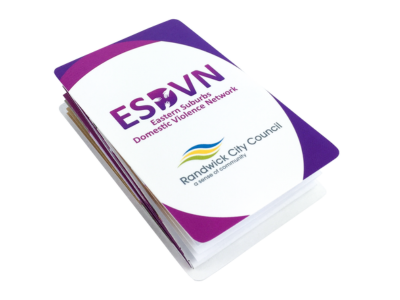
How do I ask someone about domestic and family violence?
In the end, the only way to be sure there is a problem is to ask. This might feel hard, but there are things you can do to make it easier.
You may be worried that the person experiencing the violence will get angry, upset or won’t want to talk. This may be the case, but often people are glad to be able to talk about what is happening.
Pick a quiet time to talk, when the violence isn’t happening. Let the person talk at their own pace; don’t push them to say more than they feel ready to.
If the person you are talking to doesn’t react in the way you hoped, don’t take it personally. Let it go for now, but let them know you are there if they need you.
It’s better to talk to them about the things you’ve noticed that make you worried, than to give your opinion.
You can try some questions like:
- I'm wondering if everything is OK at home?
- I noticed you have some bruises. How did that happen? Did someone do that to you?
- I've noticed you seem frightened by your partner [or other person you suspect is hurting them]. Is that right? Is everything OK?
Give them the chance to speak in private. Be prepared to listen, but don’t force them to speak if they are not ready.
Information for Workers
Domestic Violence - The Basics for Community Workers resource PDF, 1762.15 KB.
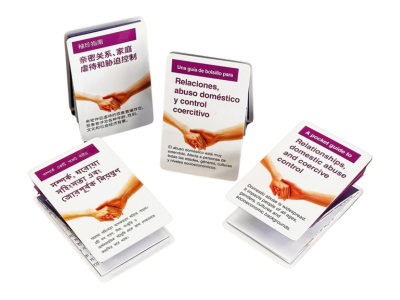
Wallet cards: Coercive Control and Non-Fatal Strangulation Information
Randwick City Council, in collaboration with the Eastern Suburbs Domestic Violence Network, has wallet cards available that explain Coercive Control and Non-Fatal Strangulation, including information about support available.
The cards are free of charge and suitable for workers to distribute to clients experiencing or at risk of DFV. Available in English, Arabic, Bengali, Spanish, Indonesian and Chinese.
Email council@randwick.nsw.gov.au or call 9093 6000 for copies.
Housing and accommodation
Emergency accommodation
If you need emergency accommodation in NSW because of domestic and family violence, contact the 24-hour Domestic Violence Line on 1800 65 64 63. They can refer you to services in your area.
- Link2home
1800 152 152
State-wide accommodation information and referral service. - Vinnie's Homeless Support
131 812
Information and assistance for people at risk of or experiencing homelessness. - Ask Izzy An online search tool for people in need of homelessness and other support services.
Youth Accommodation
- Link2home
1800 152 152
State-wide information and referral accommodation service - Caretakers Crisis Refuge 02 9389 0999 provides emergency accommodation and outreach support for young people 13-17 years of age who cannot stay at home. Email: info@caretakers.org.au
Support services
Men
- Men’s Referral Service and No To Violence
1300 766 491 A men’s family violence telephone counselling, information and referral service. - Mensline Australia
1300 789 978
A telephone and online counselling service for men with family and relationship concerns. - Safer Pathway 02 8069 9632 is a NSW Government program that supports male victim-survivors of domestic and family violence across NSW. Email: saferpathway@caretakers.org.au
Multicultural
Culturally and Linguistically Diverse (CALD) Communities and Temporary Visa Holders
Everyone in Australia has the right to be safe and live free from violence. Domestic and family violence is against the law, regardless of a person's visa status, cultural background, or country of origin.
Contact the 24-hour Domestic Violence Line on 1800 65 64 63 for information about local support services, translators are available.
- Immigration Advice and Rights Centre
9262 3833
Provides free immigration advice and representation to refugees and financially disadvantaged immigrants in New South Wales. You can make an appointment to talk to someone about legal advice or call the advice line. - Immigrant Women’s Speakout Association
9635 8022
Peak advocacy, information, referral and research body representing immigrant and refugee women in NSW.
Email: women@speakout.org.au - Muslim Women Association
02 9750 6916
Information, outreach, counselling and referrals for Muslim women. MWA also runs the Linking Hearts Multicultural Family Homelessness Support Service that assists multicultural families to access crisis accommodation and homelessness services. - JewishCare NSW
1300 133 660
Casework, counselling and outreach and referrals for the Jewish community. - Jewish House 02 9386 0770 Crisis support including Safe crisis, transitional and short-term housing for people in urgent need. We provide stability, support and a pathway toward longer-term solutions. Email: reception@jewishhouse.org.au
- Adira NSW Multicultural Centre for Women’s and Family Safety. Promoting safety for migrant and refugee women, children and families. Promotes culturally responsive, evidence-based and community informed responses to domestic, family and sexual violence in NSW, including in regional and rural areas.
Temporary Visa Holders
For people on temporary visas, domestic and family violence can create additional challenges and uncertainty. If you are experiencing violence or abuse, support services, legal assistance, and migration advice are available, and there may be options to help you remain safe while exploring your visa pathways.
The Department of Home Affairs is here to help you take steps towards safety. They will work with you to resolve your immigration matters under the migration law framework. Regardless of your visa status, you can contact The Department of Home Affairs to discuss your situation.
Depending on the visa you hold, you may be eligible for the family violence provisions. If you make a claim for the provisions, The Department of Home Affairs will contact you to discuss your situation. For more information, see Family violence previsions.
If you are not eligible for the family violence provisions and you have an ongoing visa application, you can tell us online if your situation has changed.
You can also:
- contact your processing officer directly
- call our Global Service Centre on 131 881
- send a letter to your nearest Department of Home Affairs office.
Your matter will not be refered to the police, unless:
- there is an immediate threat to your life
- you are at immediate risk of harm
- it is required due to mandatory child reporting obligations.
Visa cancellations
Only the minister or a delegated officer has the power to refuse or cancel a person’s visa. A person who commits domestic and family violence cannot cancel your visa. We use the term ‘perpetrator’ to refer to this person. If you are the perpetrator of domestic and family violence, we may refuse or cancel your visa. For more information, see Cancelling a visa.
You can report domestic and family violence conducted by a visa holder to Border Watch.
We do not encourage you to stay in violent or dangerous relationships under any circumstance. This includes to get a visa outcome. We understand that seeking help can be difficult. If you are experiencing domestic and family violence, support is here for you. We strongly encourage you to contact the police or Full Stop Australia.
Legal
Free call: 1300 888 529 / TTY 1300 889 529
Legal advice, Help at court and Family dispute resolution. This includes domestic and family violence issues, and they offer a number of specialised services.
- Women’s Domestic Violence Court Advocacy Services: 1800 938 227
- Women's Legal Service NSW: 02 8745 6988
- Kingsford Legal Centre | UNSW Sydney: 9385 9566
LGBTQIA+
Domestic and family violence can occur in all sorts of relationships. LGBTQIA+ people may have unique experiences of domestic and family violence, but they can still experience violence.
NSW Police has gay and lesbian liaison officers available who can offer additional support to LGBTQIA+ people who are experiencing domestic and family violence, or to their support people.
- Another Closet
Online resource for LGBTIQ people affected by domestic and family violence, including information for family members, friends and support services in NSW - ACON
1800 063 060 or 9206 2000
Information and referrals for counselling and support for LGBTQIA+ people experiencing domestic and family violence. - The Gender Centre: Transgender Anti-Violence Project 1800 069 115 or 9569 2366
This service includes education and advocacy related to violence, transphobia and hate crimes. It also supports people to report violence, seek legal and medical assistance and access referrals to counselling and other services. - Full Stop Australia: Rainbow Sexual, Domestic and Family Violence Helpline 1800 497 212
Support for LGBTQ+ individuals or family members, friends and supporters who have experienced sexual, domestic or family violence. - Gender Diverse & LGBTQIA+ Liaison Officers – NSW Police NSW Police provide Gender Diverse & LGBTQIA+ Liaison Officers (GLLOs) who offer confidential support to LGBTQIA+ community members experiencing domestic or family violence, as well as to their friends, family, or support people.
- In person: Community members can visit their nearest police station and request to speak with a GLLO at the front counter. GLLOs are identifiable by a rainbow badge.
- By phone: Community members can contact their local police station or call the Police Assistance Line on 131 444 (non‑urgent) and ask to be connected with a GLLO.
Disability
If you have a disability and are a domestic violence victim there are services that can help you.
Your abuser could be your husband or partner, carer, parent, child, family member or someone else who shares your house.
- People with Disability Australia1800 422 015The national peak body for disability rights and advocacy. For callers with hearing impairments, call 1800 422 016. TTY: 9318 2138
- National Disability Abuse and Neglect Hotline 1800 880 052 Anyone can call the hotline to report abuse and neglect of people with disability in government-funded disability services. Call from 9am - 7pm, Monday-Friday.
- 24-hour NSW Domestic Violence LineFor callers who are deaf or have a hearing impairment, please call 1800 671 442 to access the TTY service.
- Intellectual Disability Rights Service9318 0144, Free call: 1800 666 611
Older People
Older women may have been victims of domestic violence for years, or it may have started later in life. Your abuser could be a husband or partner, child, carer, or another family member.
- Full Stop Australia 1800 385 578
- NSW Domestic Violence Line
1800 65 64 63 - Seniors Rights Service
1800 424 079 or 9281 3600
Legal advice and information for older people in NSW. Advocacy for older people in residential care or self-care retirement facilities, or who receive in-home care. - NSW Ageing and Disability Abuse Helpline
1800 628 221 (Mon - Fri, 9am - 4pm)
Find relevant information or services to report concerns of abuse, neglect or exploitation of an older person or adult with disability.
Young Women
- Full Stop Australia 1800 385 578
- NSW Domestic Violence Line (24 hours)
1800 656 463 - The Line
Australian Government website campaign that aims to help teenagers and young adults through difficult times in their lives. - Kids Helpline
1800 551 800
24 hour counselling service for people under 25 years old. Kids Helpline offers counselling by phone, email and over the web - Youth Law Australia
1800 950 570
Free, confidential legal information and help for young people under 25. - Legal Aid Youth Hotline 1800 10 18 10 Under 18 and need urgent advice about police or criminal law issues. They are open from 9am to midnight Monday to Thursday, and 24 hours weekends and public holidays.
Aboriginal and Torres Strait Islander Women
- Wirringa Baiya Aboriginal Women’s Legal Centre
1800 686 587 or 9569 3847
Provides Aboriginal and Torres Strait Islander women, children and young people who are victims of domestic and family violence with access to appropriate legal representation, advice and referral. General information: Monday to Friday: 9am–5pm; Legal advice - Monday, Tuesday, Thursday and Friday: 9.30am–4pm. - First Nations Women’s Legal Program
1800 639 784 or 8745 6977
Legal advice and information for Aboriginal women from the Women's Legal Service NSW. Monday, Tuesday and Thursday: 10am–12.30pm - Victims Services (Aboriginal Contact Line): 1800 019 123
- 13YARN 13 92 76 Provide crisis support 24/7 to yarn with you without judgement and provide a confidential, culturally safe space to yarn about your needs, worries or concerns. We will work with you to explore options for on-going support. You will be connected to another Aboriginal and Torres Strait Islander person who will understand where you are coming from and value knowing HOW to listen, without judgement or shame.
Eastern Suburbs Domestic Violence network
The Eastern Suburbs Domestic Violence network is comprised of workers from the Eastern Suburbs area including government and non-government services who are involved in the wide spectrum of the Domestic and Family Violence sector.
The network includes workers from:
- Police
- Local Councils
- Women's Services
- Clinical and therapeutic specialists
- Lawyers
- Policy makers and community services
- Youth workers
- Culturally specific services
The network aims to share information, improve service delivery and work collaboratively to eliminate violence against women.
Network projects
Community Education projects run by the network include:
- LoveBites, a program delivered to children at schools aimed at promoting respectful relationships. The program is designed by the National Association for Prevention of Child Abuse and Neglect (NAPCAN)
- 16 days of Activism, an awareness raising campaign aimed at eliminating violence against women with activities incorporating White Ribbon Day,
- Stop DV Day held on 4 December
- Professional development workshops aimed at upskilling sector staff
Who is the network for?
This network is open to services and workers who work with women and children in the Eastern Suburbs who are experiencing the impact of Domestic and Family Violence.
Randwick Council is a member of this network which meets monthly.
Council initiatives
DV Safe Phone
Randwick City Council is proud to support DV Safe Phone.
DV Safe Phone is a charity that takes old unused phones, reconditions them, and provides them for free to Domestic Violence Services that support women escaping violence.
DV Safe Phone collections boxes can be found at: Margaret Martin Library at Randwick, Lionel Bowen Library at Maroubra, Malabar Community Library, Des Renford Leisure Centre, Randwick Council Administration building at Randwick and Clovelly Bendigo Bank.
Information from DV Safe phone and how it works:
Does my phone have to work?
DV Safe Phone can accept any phones, however we want to test your old phone and get it back out as soon as possible, so if it works, has some charge (we will fully charge it and check the battery health) and is reset (we check every phone to ensure it has been reset), we can get it out ASAP.
If the screen is broken or something is just not quite right, that's ok too. We'll try and fix as many phones as we can. The ones beyond repair we recycle through MobileMuster.
Note, if your phone is an iPhone it must have its iCloud removed to be able to go to a victim, otherwise we will recycle it.
What if I don't erase my phone properly?
Don't worry, every phone we receive goes through a process where we charge it, test it and factory reset it. So, we assure you it WILL be erased.
What if I forget to sign out of ICoud?
Unfortunately, iCloud is an apple security feature that we cannot get around. If your phone is still signed into iCloud when we get it, your phone will be unable to be used to protect a victim of domestic violence.
Instead, we will use your phone for parts (battery, screen, microphone etc).
What happens to the data on my phone?
Don't worry, every phone we receive goes through a process where we charge it, test it and factory reset it. So we assure you it WILL be erased.
With so many phone brands and models out there, it's tricky to give you exact rules about which devices we can accept. But here's what we generally look for:
- iPhones: We can usually repurpose iPhone 6 models and anything newer (iPhone 7, 8, X, and beyond).
- Android phones: This includes Samsung and other brands. If your Android phone works on 4G networks, there's a good chance we can find it a new home.
- The 3G shutdown matters: Since Australia's 3G networks have been switched off, we can't repurpose phones that only work on 3G anymore.
Not sure about your phone? Just send it our way in the boxes! We'll check if it can be repurposed. If not, don't worry – we'll wipe all your data and recycle the phone and its parts through Mobile Muster. Either way, nothing goes to landfill.
Following are simple instructions on how to prepare your phone before you send it to us. Simply click below and follow the prompts.
Erasing Data and Signing Out
iPhone
→ Settings → General → Transfer or Reset iPhone → Erase All Content and Settings
→ You may be asked for your Apple ID/iCloud password to confirm.
Samsung
→ Settings → General management → Reset → Factory data reset
→ You may be asked for your Samsung account password to confirm.
Other Android Phones
→ Settings → System (or Backup and reset) → Reset → Erase all data (factory reset)
Tip: If you’re having trouble finding these menus on an Android phone, just open Settings, use the search bar at the top, type “reset,” and select Erase all data (factory reset). Then follow the prompts.
Step Out Speak Out Walk
The Step Out Speak Out Walk is an annual community event which raises awareness about domestic violence and asks everyone to stand up and say no to domestic and family violence. The annual Walk is organised by NSW Police Eastern Beaches Local Area Command and Randwick City Council with support from the SES and the Juniors.

Domestic and Family Violence Vigil
Join us for the annual Vigil 1-2pm Wednesday 6 May 2026

On average, one woman a week in Australia is murdered by someone known to them. The first Wednesday in May is Domestic Violence Remembrance Day. This Vigil is a partnership between Randwick Council and local domestic violence services. It is to honour the women who have lost their lives due to domestic and family violence, raise awareness that this violence occurs in our community and help is available.

Social housing
If you need longer-term housing support, you can find information for applying for social housing and the state-wide housing register through Homes NSW | NSW Government.